




In the last six years, honey bees have become an unlikely source of debate in Newton. During the COVID-19 lockdown, many residents took up backyard beekeeping to entertain themselves, and found the hobby to be educational and fulfilling. However, others worry about the increase in honey bee hives having negative impacts on native bee populations.
In 2021, the Newton Conservation Commission decided that all apiaries (beehives) on conservation land must be registered and licensed and fit into specific guidelines. Since then, hive registration and restrictions have been a highly debated topic, with some even arguing that there should be no hobbyist beekeeping on conservation land.
Much of the opposition to recreational beekeeping stems from the fact that honey bees are not native to North America, sparking concerns of competition with native bee populations that are already endangered.

Conservation biologist and Newton resident Jonathan Regosin told Fig City News that “it is indisputable that honey bees can negatively impact native bees through competition.” Regosin, along with other Newton environmentalists, is advocating for all hives, including those on private land, to be registered with the City, a step he said would help researchers and conservators “look at trends [with the native bees] over time,” as beekeeping is “becoming more popular.”
The Newton Conservators official position on this issue states: “Unless and until clear evidence emerges that managed honey bees are not a threat to native pollinator biodiversity, efforts should be made to limit, or at least prevent significant increases in, the density of managed honey bees.” The organization also supports the licensing of all private beekeeping to track the number and density of hives.
An opposing view
However, research conducted in Newton offers a different perspective. A 2024 study by Boston University biology professor Richard Primack found that, in Newton, “floral resources seem sufficient to allow coexistence between honey bees, bumblebees and other native bees.”
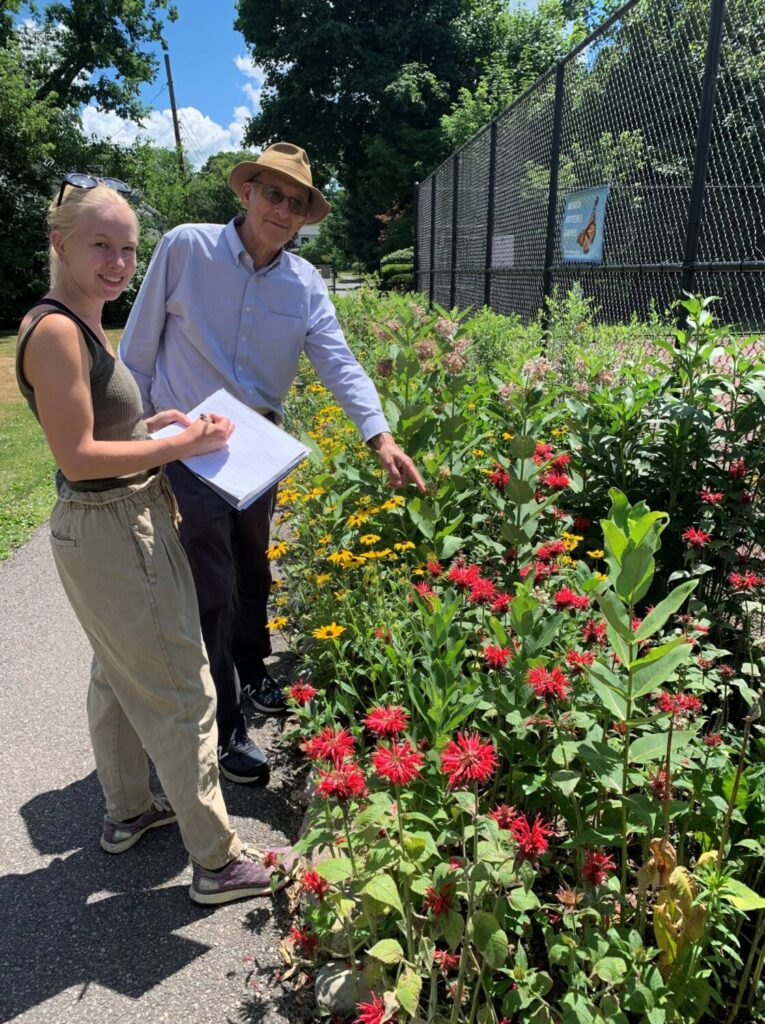
In a conversation with Fig City News, Primack described the controversy surrounding honey bees as “a little bit of a tempest in a teapot.”
He said that when people in Newton and elsewhere in the Boston area were talking about pollinator gardens and competition between honey bees and native insects, “they often didn’t have good information,” prompting him to conduct his own research. Primack said that concerns about honey bee competition have overshadowed what he sees as more immediate threats to pollinators, particularly the widespread use of pesticides and herbicides.
“These herbicides and pesticides, when they are applied throughout Newton, are directly killing native insects,” said Primack.
While Primack said hive registration could be beneficial, he added that “if the City of Newton moved toward regulations on using herbicides and pesticides by private homeowners and by commercial landscapers, it would probably have a greater impact.”
Benefits of recreational beekeeping
While scientists continue debating the ecological effects of managed hives of honey bees, many Newton residents say beekeeping has become an educational hobby that has deepened their appreciation for pollinators.
Steven Siegel, who has kept bees for ten years, became a beekeeper after a neighbor offered him a hive.
“I thought it was really fascinating, and I was interested, so I took his hives,” said Siegel.
He has since acquired two more. Because his hives are on private property, Siegel did not have to register them with the City. He said requiring registration for privately owned hives “seems unnecessary.”
Although Siegel initially became interested in beekeeping because he “loved the idea of natural honey,” he said that the experience has become much more than honey production.
“They really are remarkable little creatures,” he said. “It’s hard to imagine that they have infinitely small brains, but they also have some fairly sophisticated activities as social beings. I love that.”
Siegel also saw improvements in the cultivated plants around his hives. “Our plants and flowers are doing better than before,” he said, adding that his neighbors saw improvements in their gardens, as well.
Additionally, Siegel mentioned that feral hives (hives in the wild not kept by a beekeeper) do not fare as well as they used to, since non-native parasitic Varroa mites were introduced to the North American honey bee population a generation or so ago, while managed bees are generally treated for mites.
“[Honey bees] are critical for keeping the pollinator populations at high-enough levels, because feral bees simply are not doing as well anymore” said Seigel.
Alla Ohorilko and her husband, Vasyl, have been keeping the hives in Nahanton woods since 2020.
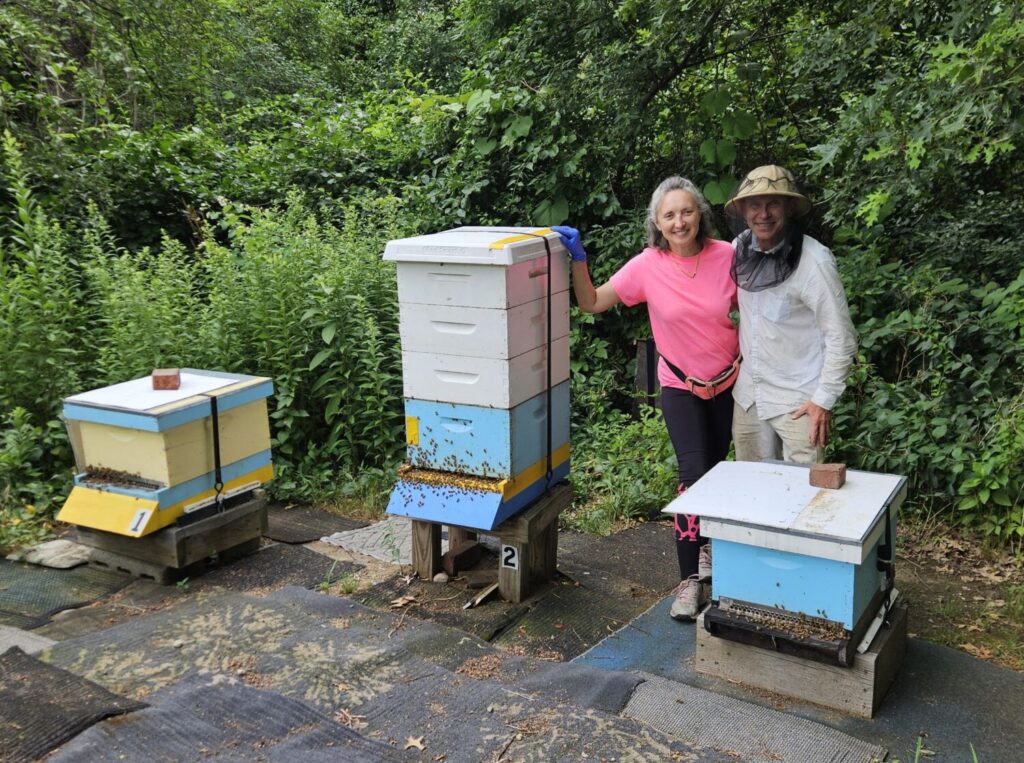
When longtime beekeeper Dave Reilly moved to Cape Cod during the COVID-19 pandemic, the Ohorilkos took over caring for his apiary.
It was springtime and the bees were swarming, meaning they were looking for a new home. Ohorilko had very little experience beekeeping, and initially she caught the bees in a cardboard box, acting quickly to prevent them from flying away. After hours of searching for a new hive, she found a store in Rhode Island that was open despite the lockdown, and without hesitation, she made the trek to buy her bees a home.
“It was a very crazy time,” said Ohorilko, describing her first year with the 16 hives. Despite the work required, Ohorilko quickly found a love for the bees. Remembering how her husband waited restlessly for spring during their first winter with the bees, she said, “He couldn’t wait to open the hives!”
Ohorilko agreed that the native bees are struggling due to a lack of wildflowers and overmowing of lawns throughout the city. “There is no food for the native bees,” said Ohorilko. In response to concerns about honey bees competing with native bees, Ohorilko mentioned that many of the cultivated plants in the community gardens surrounding their hives in Nahanton Park are not pollinated by native bees. This means that the non-native honey bees are actually beneficial, helping the gardens by pollinating the plants that native bees cannot pollinate.
Ed. Note: This article has been updated with corrections and additional information from Steve Siegel.
Leah Greiner is a Fig City News summer intern, a rising senior at Newton South High School, and co-Editor-in-Chief of the Denebola.


