




Newton is moving forward with major investments in stormwater infrastructure after City officials accepted a $4.3 million low-interest state loan to fund projects designed to reduce pollution entering the Charles River watershed and help the city meet federal and state environmental requirements.
Massachusetts Clean Water Trust loan
The City Council recently approved the acceptance of a $4,329,664 loan through the Massachusetts Clean Water Trust State Revolving Fund. According to Public Works Commissioner Shawna Sullivan, the funding will support stormwater management improvements at Cold Spring Park, Cabot Dog Park, and potentially Braceland Park.
The projects were identified through technical analysis conducted by the City’s consultant, Woodard & Curran, and are expected to reduce phosphorus pollution entering the Charles River watershed by approximately 55 to 66 pounds annually, a modest share compared with the several thousand pounds of phosphorus currently estimated to flow into the watershed each year. City officials described the projects as some of Newton’s most effective near-term opportunities for meeting regulatory requirements while taking advantage of favorable state financing.
Cheesecake Brook
The loan comes as Newton continues work on several stormwater-management initiatives throughout the city, including the recently completed Cheesecake Brook restoration project near Albemarle Field. That project was highlighted during a Charles River Watershed Association (CRWA) event on June 17.
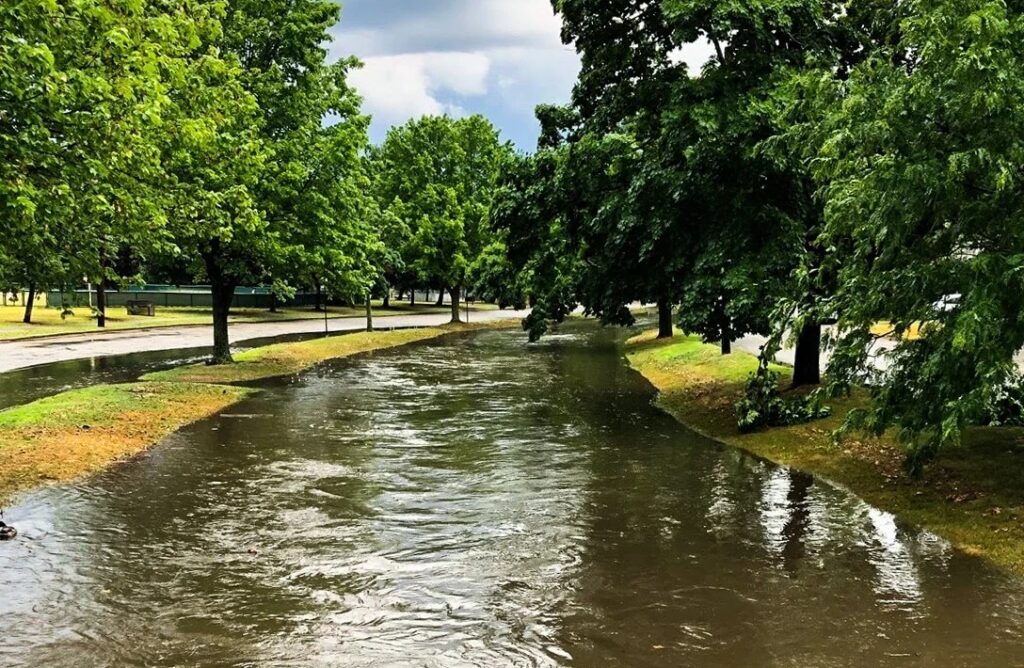
“The primary goals of the project were to provide flood relief to the area, contribute to community greening, and improve aquatic habitat conditions within Cheesecake Brook,” Alfredo Con, a stormwater associate at the CRWA, said.
Funded through the Commonwealth’s Municipal Vulnerability Preparedness Grant Program, the project includes restoration work along the banks of the brook as well as the installation of a subsurface infiltration chamber beneath the new synthetic turf field at the renovated Albemarle Field.
The improvements are designed to reduce flooding, decrease nutrient pollution entering both Cheesecake Brook and the Charles River, reduce erosion, and improve conditions for aquatic life.
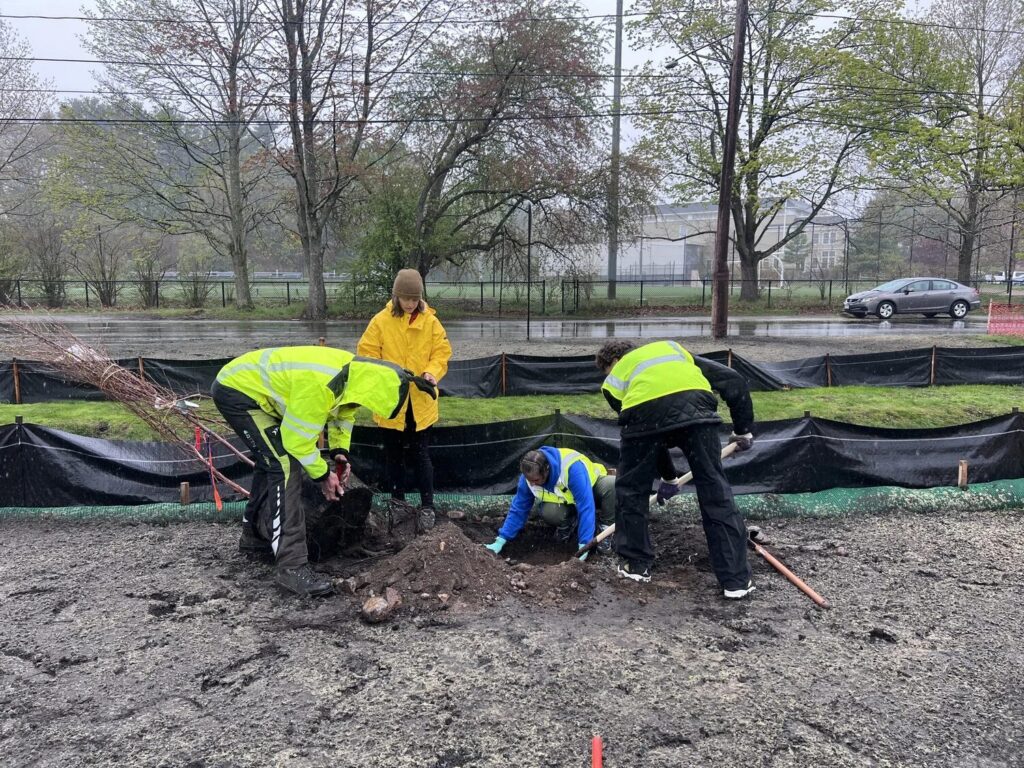
“Our expected benefits of the project are similar to our goals, which are to reduce flooding, decrease nutrient pollution to a sensitive urban stream and to the Charles River, decrease erosive impacts on stream bed and stream bank, mitigate flooding impacts on neighbors and public school students, and contribute to the long-term restoration of Cheesecake Brook as an urban stream supporting biodiverse life,” Con said.
The project also serves as a visible example of how municipalities are increasingly turning to green infrastructure to address environmental challenges. Located near Day Middle School, Horace Mann Elementary School, and Albemarle Field, the restoration project places nearly 1,000 students in daily contact with the restored stream corridor, according to Con.
Con added that stormwater management projects are becoming increasingly important as communities confront the impacts of climate change and more frequent extreme weather events.
“Stormwater-management projects like these are important to communities like Newton because they begin to rectify some of the current challenges created by the historic local draining of wetlands and the creation of urban drainage, which contributes to flooding risks,” Con said. “As climate change continues to strengthen flood risk and extreme precipitation likelihood, it’s important for Newton to think proactively about infrastructure and community resilience.”
In addition to addressing flooding concerns, the projects help Newton meet federal Clean Water Act requirements. Con noted that Newton is required to reduce the amount of phosphorus entering the Charles River watershed through its stormwater system by 2038, and projects such as Cheesecake Brook help the city make progress toward those goals.
“Instead of working against nature, we use what we know about the co-benefits of green infrastructure to take advantage of restoring habitat, water quality, and flood resilience while ensuring our cities function properly,” Con said.
Other state funding
In addition, a request by State Representative Amy Sangiolo for $50,000 for Cheesecake Brook improvements was included in the $2.5 billion Environmental Bond Bill (the Mass Ready Act, S3064), which was passed by the House of Representatives on June 17. The bill will now go back to the Senate for further consideration.
Together, these investments represent part of Newton’s broader effort to improve water quality, reduce flooding, and build resilience as climate and environmental challenges continue to grow.