




When Greg Maslowe started working as manager of Newton Community Farm (NCF) in 2006, there was no tractor, greenhouse, or even any seeds. However, much has changed at this “small but mighty” nonprofit as it marks its 20th anniversary this year.
Before NCF was founded, the 2.26-acre parcel had a long history of farming, but two decades ago, “it was a blank slate,” Maslowe recalled. Nowadays, “this is a really fecund little farm.”
Today, Maslowe is farm director, and Andrea Egan took over his role as manager a year ago. Both are fonts of knowledge about the nonprofit and its history – as well as enthusiastic veggie eaters.
“I make a lot of salads this time of year,” Egan said. One day she hopes there will be a Newton Community Farm cookbook to give customers inspiration.

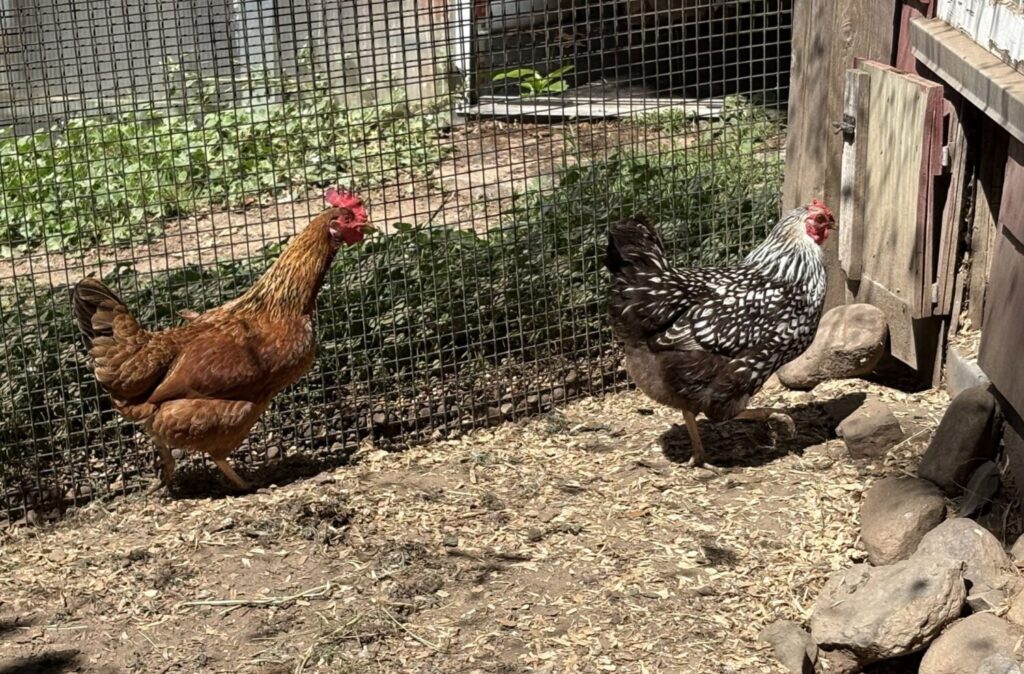
The bustling farm “grows more than 50,000 pounds of food each year on about one acre of land” using sustainable methods, according to the website. The last working farm in Newton, it is located at 330 Nahanton Street, at the corner of Winchester Street. In addition to sections where organic crops are grown, it includes a residence, a historic red barn, and a shaded area for 50 chickens, half of which are old enough to lay eggs, which the staff sell.
Customers include those who stop by the rustic farm stand on Winchester Street, others who shop at the city’s farmers’ markets, and members of the farm’s Community Supported Agriculture (CSA) program that lets people buy a share of NCF’s harvest in advance.

In addition, the farm donates to the Newton Food Pantry, accepts SNAP (food stamps), and works to increase food access, said Laila Bravo, who became NCF’s executive director in April.
On a recent weekday, resident Megan Peterson drove over to see whether the farm stand carried any Hakurei turnips, “and they did not disappoint,” she said.
The NCF sells only what’s in season, and on that day, there also was an abundance of lettuce, green garlic, bok choy, and freshly cut herbs available.
Making plans to visit all summer, Peterson said, “I like to support local businesses as much as I can.”
Community farm, community support
Part of the farm’s mission is to reach out and teach the public about where their food comes from, how it’s grown, and how to cook a variety of crops.
“A lot of our education is very hands-on,” said Maslowe. “I’m super excited to see people learning stuff.”
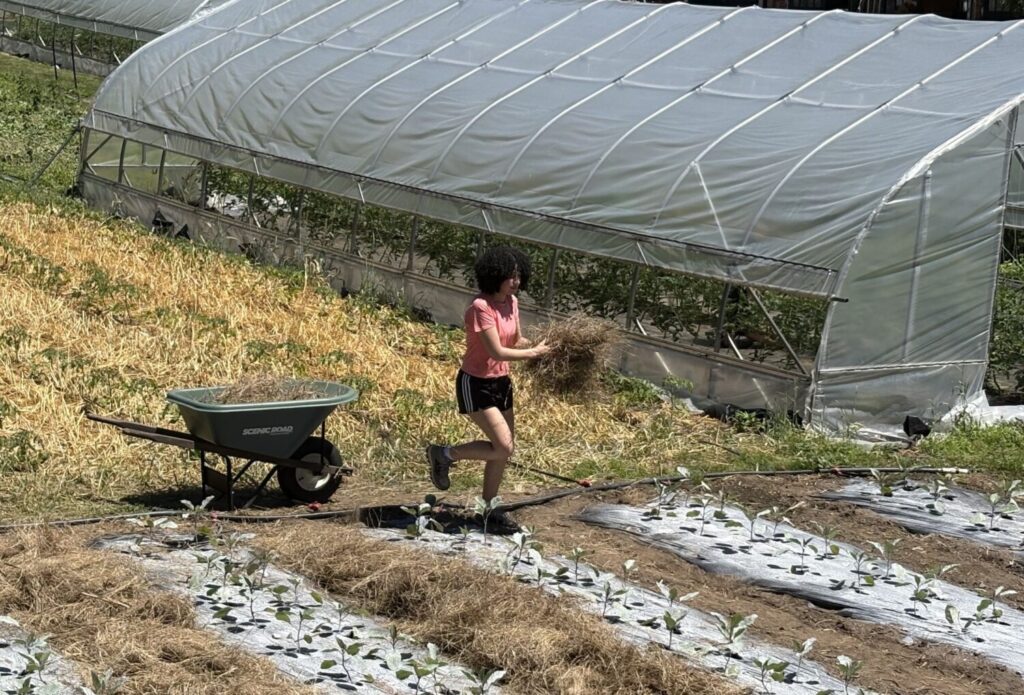
Another way the farm connects with the community is through its many dedicated volunteers who offer essential assistance while gaining knowledge. They learn through jobs like planting, harvesting, protecting crops from weeds, and other important chores to help NCF thrive.
“We could not do it without them,” said Bravo.

Overlooking the farm is the impressive new Opus Newton, a senior living community. After farm staff held an educational program there on gardening, some residents decided to volunteer at NCF, creating yet another community connection.
The farm also runs an unpaid high school internship program (although next summer NCF hopes to fund the position) that combines hands-on work with educational programming. This year there are eight interns who come from the surrounding area, said Bravo.
NCF responds to the community’s needs by growing popular crops in response to customers’ food needs and interests, while also experimenting with new options.

“You have to learn what your customers want,” said Maslowe.
“Every year we think, ‘What can we tweak slightly?,’” said Egan. Last year the farm tried collard greens again after a long absence. The experiment worked, and NCF again grew the vegetable this summer.
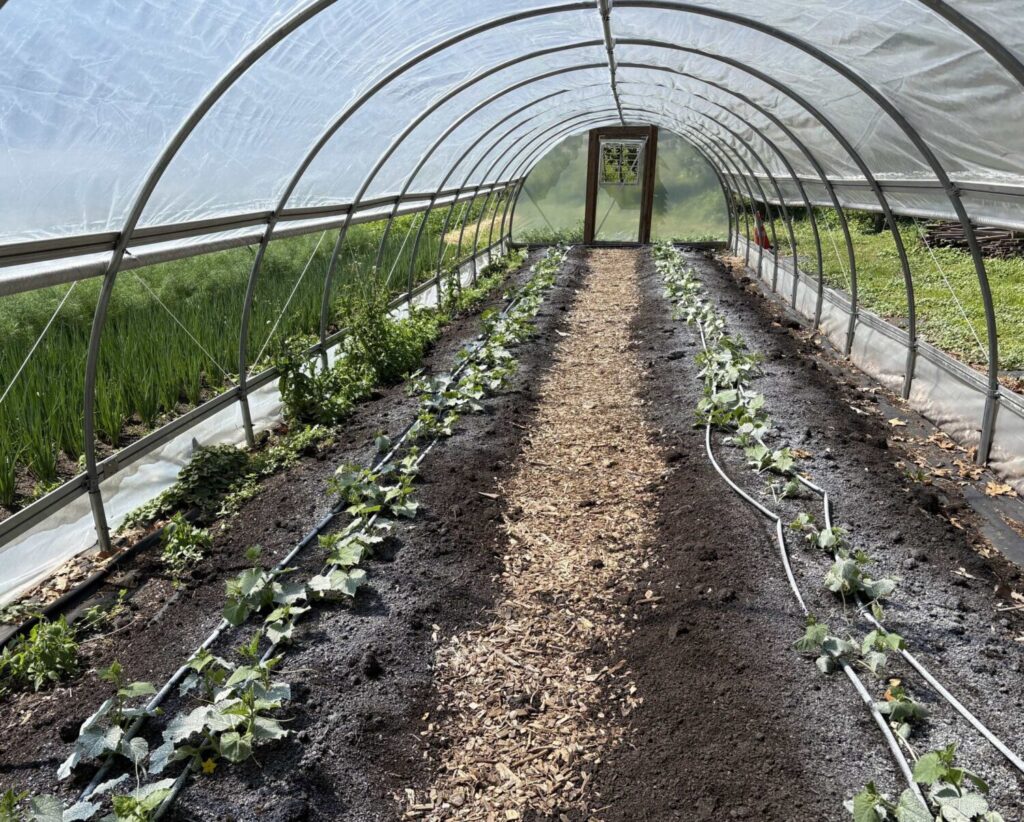
The farm also will try out a new – although “weird looking,” according to Egan – crop called “Salt-and-Pepper Cucumbers.” The heartier variety is a light, bright green, compared with the more familiar dark green varieties commonly found at grocery stores.
“They’re very fickle plants,” said Maslowe.
Future growth
Since beginning her job in April, Bravo has many plans for the farm’s future. One of the challenges she’ll tackle is visibility. While some people feel very connected to the farm and are regular visitors, many others drive by and do not realize it exists.
In addition to installing better signage, Bravo said a priority is to “refresh and expand the programming for children and youth.”
The NCF hopes to create more organizational partnerships with the Newton Free Library, Green Newton, Service Stars, and other groups to increase educational opportunities for kids of all ages, she said.
Programs will give youngsters a chance to try eating what they grow and help them “appreciate how delicious fresh vegetables are,” said Bravo.
As staff members look ahead to the next 20+ years, they hope to spark more connections between the city and the farm.
“I don’t want us to be a hidden gem,” said Egan, who said she enjoys interacting with new visitors who have just recently discovered the NCF.
“This [farm] is for everyone in Newton,” said Bravo. “All members of the community are welcome here.”
A brief history
The land on which the NCF sits has long been used for farming, and the Anginos – the last family to own it – wanted it to stay that way.
According to historical information provided by the NCF, by the 18th century, Newton’s rural farming landscape had transformed due to industrial development powered by the Charles River. In the 1850s, after train lines connected Newton to Boston, the area became “a densely settled, suburban residential community.”
However, the situation was different in the area south of Route 9, which remained agricultural for some time.
Unfortunately, according to the NCF, “very little information is available about the specific use of the farm from 1670 to 1917.”

It was presumed that tenants had farmed the land until the Angino family bought the parcel in 1917, which included the home where they lived. They used the acres to help feed their family of nine, rather than making it their primary source of income, according to the NCF.
The family raised chickens and other animals and grew a variety of crops. They also had a small orchard of fruit trees. Surplus veggies and flowers were sold on site, according to the NCF.
“The Angino family was part of the massive immigration of four million Italians to North America between 1880 and 1920,” according to the NCF.
Jerry Angino, the most well-known of the family, lived all his life on the farm his father purchased. He had many roles in the Newton Public Schools – including being the first guidance counselor.
He also was a truant officer. In that role, “Jerry used the farm as an opportunity to help troubled children by keeping them busy and out of trouble.”
Over the years, the family refused many offers from developers to purchase the property. After Jerry and his sister Rose died, “the Angino family wanted the legacy of the farm, which by then was the last working farm in Newton, to continue. Their heirs honored their wishes by working with the City to preserve the property as a farm,” according to the NCF.
In January 2005, the Newton Board of Aldermen “voted to purchase the property from the Angino Family at a cost of $2.5 million using Community Preservation funds,” according to the NCF. The City purchased the site “to preserve open space and create an active agricultural and educational site.”
After taking possession of the property in May 2005, the City “formed a Farm Commission to oversee the activities of the farm and hire a nonprofit operator.”
The NCF was “founded in 2006 through a partnership with the City of Newton to preserve the historic Angino farm. NCF is committed to growing both food and community on this historic site.”