




As smoke from Canadian wildfires filled the skies of Newton, some residents considered a frightening possibility: What if a wildfire broke out in Newton? With 2026 being Middlesex County’s ninth driest year to date, concerns about possible wildfires in one of the many woods of Newton are not unwarranted.
Richard Primack, a Boston University biology professor, longtime Newton resident, and frequent visitor to Webster Woods, said various climate factors have resulted in a higher likelihood of wildfires.
“What we’re experiencing right now because of climate change is that there’s actually greater susceptibility to wildfires than there was in the past,” he said. “That’s because the temperatures are higher, so the leaves and the branches on the ground dry out more.”
Fire Warden weighs in on the risks
David Celino, the Chief Fire Warden for the Massachusetts Department of Conservation and Recreation, also explained that the ecological makeup of eastern Massachusetts has created the perfect mix of fuel for wildfires.
“When you look at towns like Newton, the suburbs of Boston, or the Blue Hills area, we don’t think of them as being necessarily prone to wildland fires,” he said. “But if you think about it, there’s a lot of open space there, and in that open space are those flammable fuel types like oak, hickory, pine, pitch pine, shrubs, huckleberry, and a fair amount of grassland still intermixed amongst that population.”
Celino added, “Most homes that are lost in wildland fires are not lost from direct flame impingement. They’re lost from ember impingement. [Embers] get into crawl spaces, into the gutters, into vents on the ends of the houses, underneath wooden decks, in firewood piles that are stacked right against the home. That’s what takes the homes.”
Along with high temperatures and abundant surface fuels, Newton is currently experiencing unusually low levels of rainfall. According to the National Integrated Drought Information System, Middlesex County has received 6.09 fewer inches of rain than normal, creating a dry environment in which wildfires thrive.
Summertime is especially dangerous for forest fires because of lightning strikes. During the summer months, lightning strikes are far more common due to higher instability and moisture in the atmosphere. “Dry lightning” – lightning without rain – is also especially common in the summer and is another cause of wildfires.
Humans cause fires
Although lightning can cause fires, the National Park Service has found that 85% of all wildfires are caused by humans. Furthermore, wildfires caused by people tend to be more harmful because they typically occur near more densely populated areas.
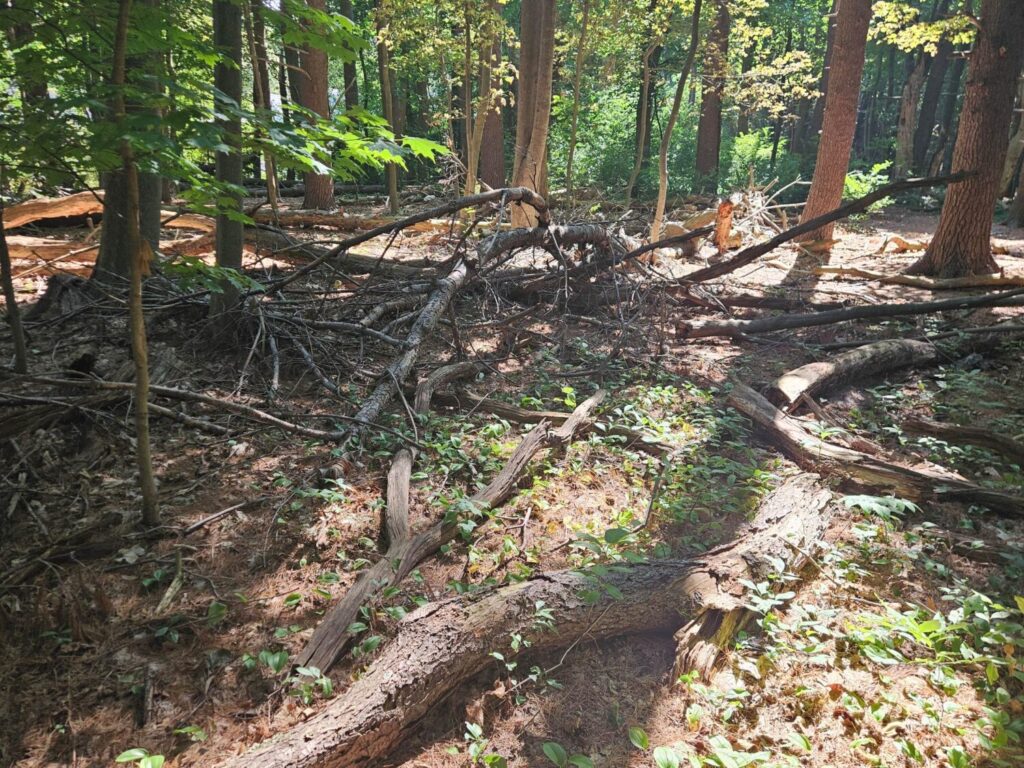
Newton’s last major woodlands fire was a 2018 ground fire in Webster Woods, fueled by dry leaves and branches on the forest floor. While the cause remains unknown, Primack said that humans are more often than not to blame.
“The most common reason why fires get started is people,” he said. “[For example,] homeowners who have fires in their backyard, like barbecues, or homeowners who burn yard waste in Newton.”
Following the 2018 fire, Newton resident Rory Altman, who lives next to Webster Woods, explained that since there was no clear cause for the fire, it was challenging to find a way to grow from the experience.
“I don’t think anybody knew what we would have done to prevent it, because it wasn’t clear that it was due to the electrical lines that go through the woods,” he said.
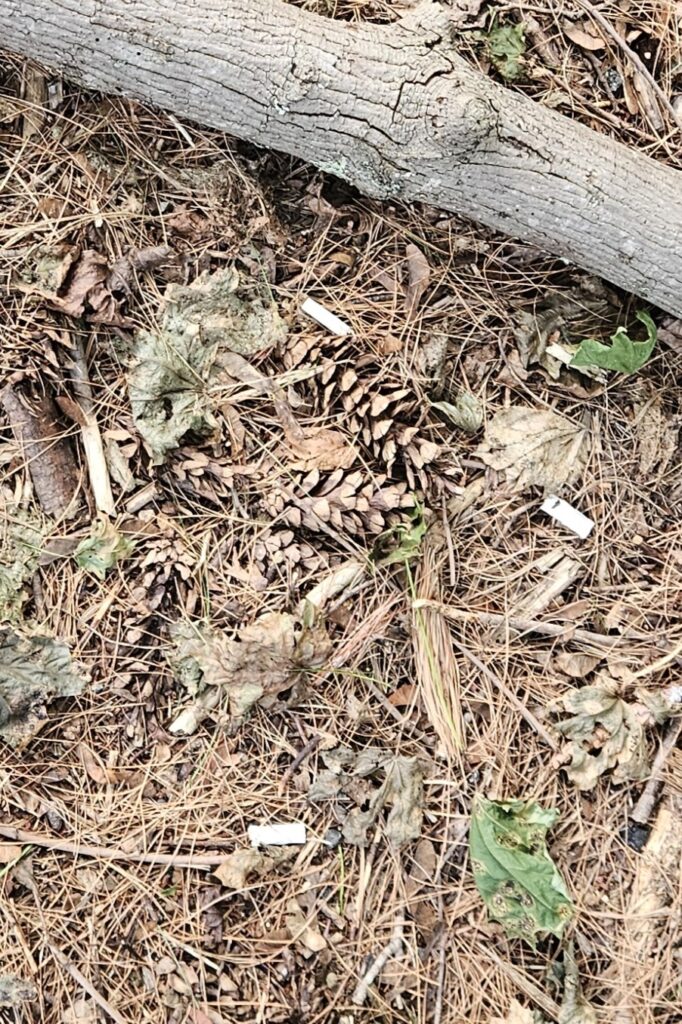
While not every fire’s cause can be identified, Primack said that the likelihood of local fires would be greatly reduced if residents made sure to dispose of their cigarettes safely.
“The biggest thing that people can do is not smoke in the woods, especially not to throw their cigarettes on the ground and to make sure their cigarettes are out.”
Newton Fire Department’s preparation and response
In order to combat such fires, Newton Fire Department (NFD) Chief Greg Gentile said that the department uses special equipment as well as backup resources.
“Brush and woodland fires are something we prepare for. The Fire Department has equipment specifically intended for these incidents, including lightweight, easily deployable hose lines that allow our firefighters to move water significant distances into wooded or otherwise difficult-to-access areas where our apparatus cannot go,” he said.
Chief Gentile said that the NFD also has systems in place in case of a brushfire that might exceed what the initial response team is capable of containing.
“We also have the ability to bring in additional resources when an incident exceeds what can reasonably be handled with our initial response. Massachusetts recently revamped its statewide Fire Mobilization Plan when it comes to brush fires. These updates provide a much more organized system for requesting and deploying resources between communities,” he said. “Locally, District 13 has a Forestry Strike Team specifically equipped and organized to assist with brush and woodland fires when additional resources are needed.”
When there are conditions that create an increased risk for wildfires, Chief Gentile said the NFD posts signage in affected areas to make residents aware of potential hazards. He told Fig City News, “Prevention and public awareness are important. During periods of extreme drought, we make a greater effort to remind residents about the dangers associated with outdoor ignition sources. Newton prohibits open burning, which gives us another important tool for limiting unnecessary ignition sources during periods of elevated fire danger.”
James Garrett is a Fig City News student reporter and a senior at Newton South High School, where he is a centerfold editor for the Lion’s Roar student newspaper.